Every job below is one we do ourselves across Garden Grove.
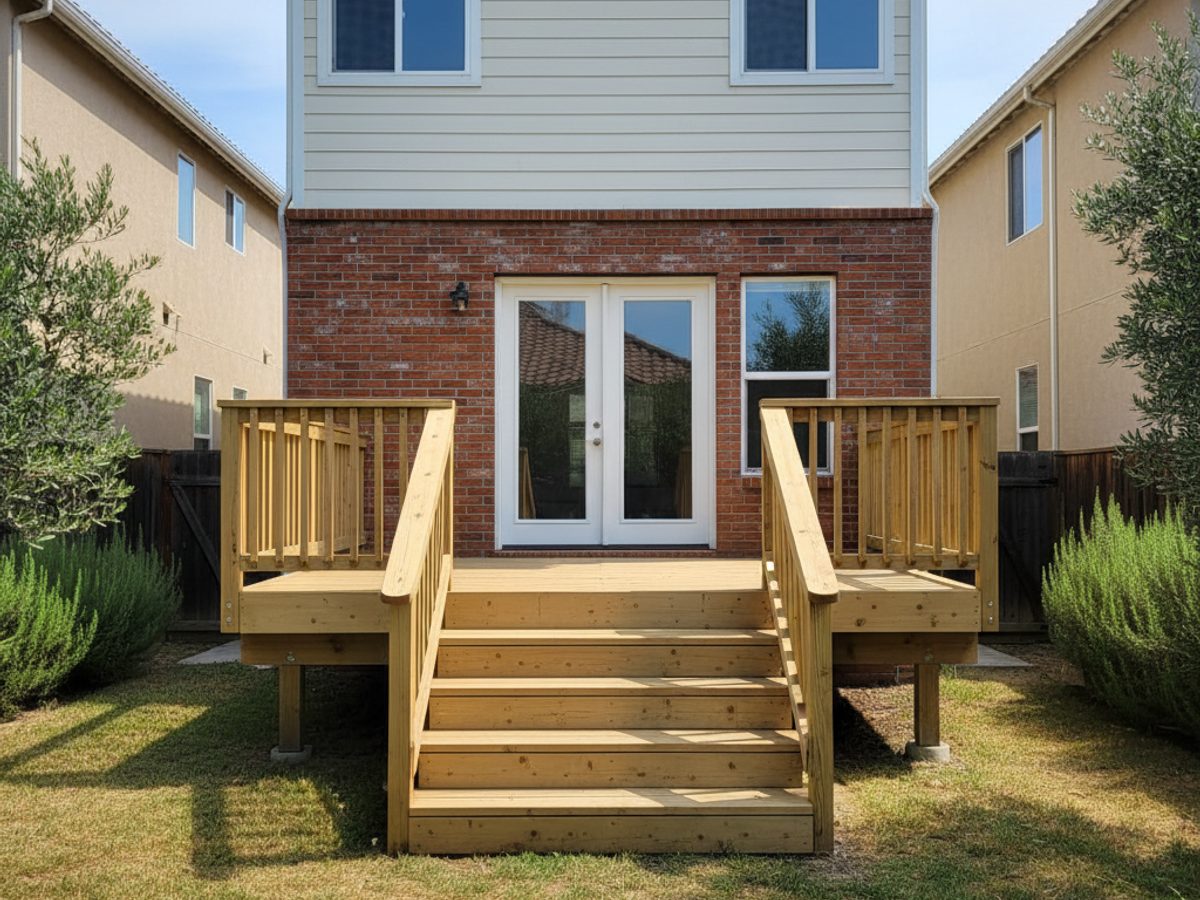
We dig footings to the depth code requires for the soil, which around Orange County usually runs 12 to 18 inches. Posts get set in concrete, beams get bolted rather than just nailed, and the ledger board gets flashed properly so water can't get behind it and rot the house rim joist. Joist spacing gets tightened up on composite decking since that material sags more than real wood over a wider span.
Most repair calls start with a soft spot underfoot, which usually means a joist has rotted from water sitting against it. We pull the decking in that section, check the joist and ledger connection, and replace what's actually failed instead of screwing a new board over a bad frame. A deck that's had standing water problems for years might need more than a patch, and we'll say so up front.
Wood decking left bare in Southern California sun greys and splits within a year or two. We pressure wash at low PSI so we don't fuzz up the grain, let it dry a day or two, then apply a penetrating stain and UV-rated sealer. Composite doesn't need this, but the fasteners and any wood framing underneath still do.
Sloped backyards, pool decks, decks that wrap around a corner of the house, we draw it out before we cut anything. We'll walk you through footing placement, board direction, and where the stairs make sense given your yard's grade. If your HOA needs drawings for approval, we can put together what they'll want to see.
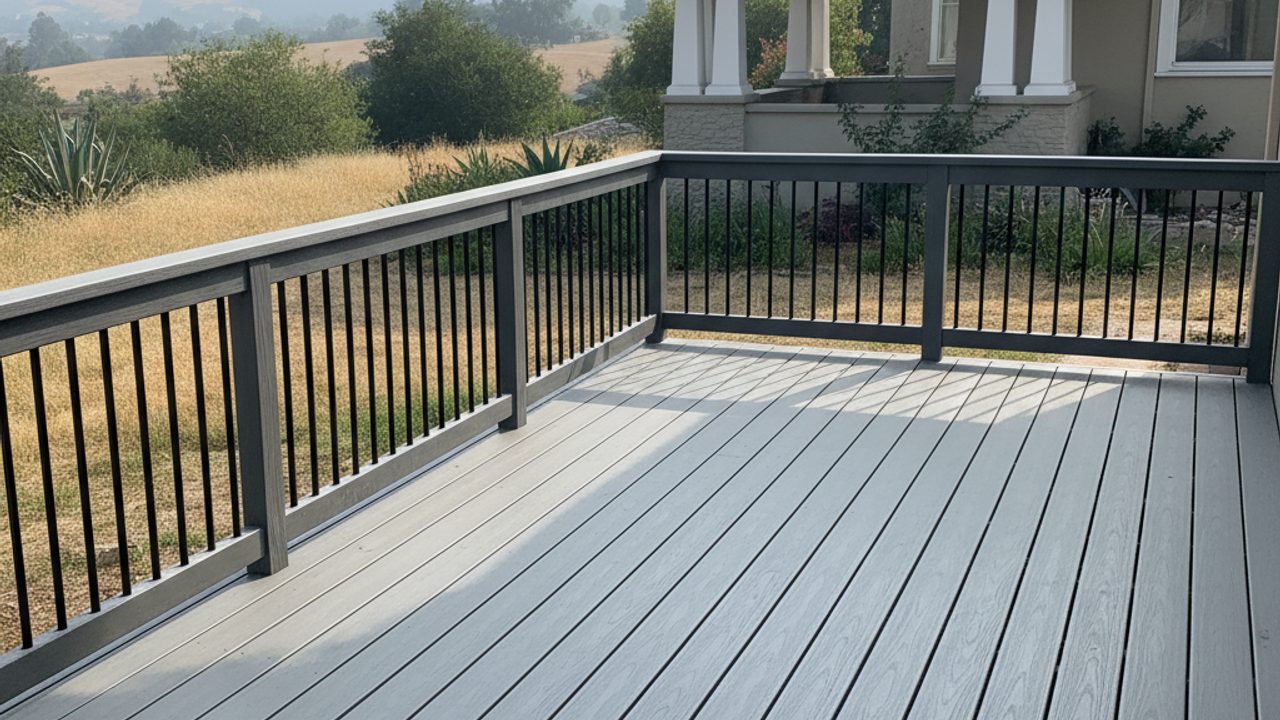
Composite costs more upfront than pressure-treated lumber but skips the annual staining and doesn't splinter. We still frame with real lumber joists underneath, hidden fastener clips keep the deck screws out of sight, and we leave the manufacturer's gap spacing so the boards can expand in summer heat without buckling.
A railing that flexes when you lean on it is usually a post rotted at the base or bolted into decking instead of the frame. We anchor posts through the rim joist with structural screws or through-bolts, since code requires the railing to hold real lateral force, not just look sturdy. Cable rail, wood baluster, or composite, we'll match what's on the house if you're only replacing a section.
If the frame underneath is still solid, you don't need to rebuild the whole deck, just replace the decking boards and refinish. We check every joist while the old boards are off, since that's the one time it's easy to see problems before they're covered back up.
Before you sell a house with a deck, or if you just want to know what you're dealing with, we check the ledger connection, footings, joist condition, and railing height against current code. You get a written rundown of what's fine, what needs attention soon, and what's a safety issue now.
Old deck coming out to make way for something bigger, or just coming down because it's not safe anymore. We haul the lumber and hardware off ourselves, so you're not stuck with a pile of nail-studded boards in the side yard.
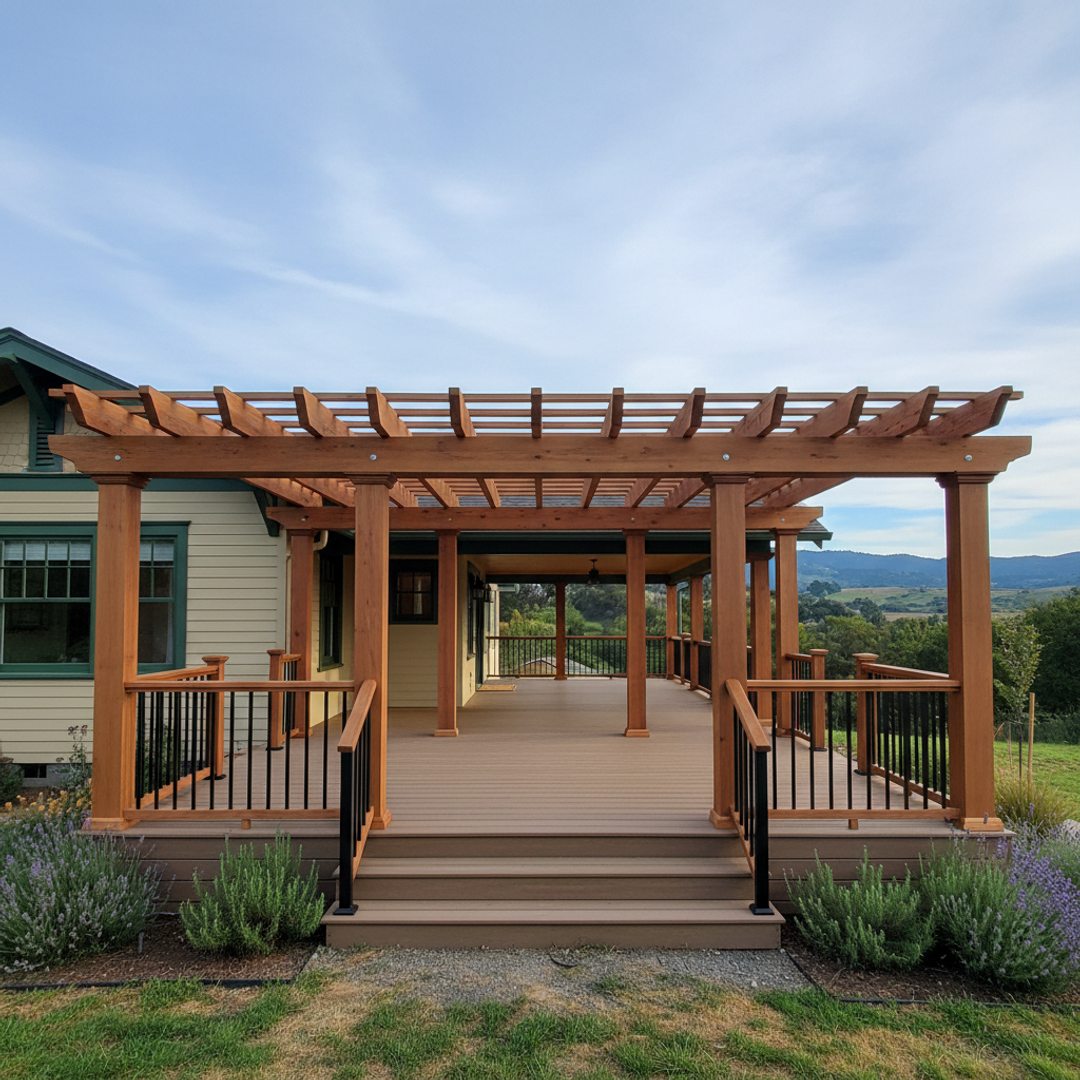
A lot of Orange County decks need shade more than they need more square footage. We build pergolas and shade structures that attach to or sit beside an existing deck, ledger-mounted to the house or freestanding on their own footings depending on your setup.
Four steps, and no surprises in any of them.
You tell us what you want doing, we look at what is actually there, and we ask the awkward questions early.
In writing, itemised, free. If something might add cost later we flag it now rather than at the end.
Same crew throughout. We cover your floors, keep the dust down and tidy up before we leave each day.
You point out anything you are not happy with and we fix it before the invoice, not after.
Deck installation and repair covers most of Orange County.
Questions that come up once a deck project is underway.
Describe the problem and we will tell you what it probably is. No obligation.